The emergence of LED highbay lights, with their four core advantages of "energy efficiency, ultra-long lifespan, multi-scenario adaptability, and green environmental protection," specifically addresses these pain points, becoming the preferred solution for enterprise lighting upgrades.
For production workshops, logistics centers, and large supermarkets, lighting systems are the "invisible cornerstone" of daily operations—they not only affect operational efficiency and safety, but also directly impact a company's long-term operating costs. In the era of traditional lighting, products such as metal halide lamps and fluorescent lamps generally suffered from high energy consumption, short lifespans, complex maintenance, and significant pollution. Frequent replacement of damaged lamps in workshops delayed production, high electricity bills became a cost burden in logistics centers, dim lighting in supermarkets affected the customer shopping experience, and mercury pollution hazards in community centers raised concerns.
The emergence of LED highbay lights, with their four core advantages of "energy efficiency, ultra-long lifespan, multi-scenario adaptability, and green environmental protection," specifically addresses these pain points, becoming the preferred solution for enterprise lighting upgrades.
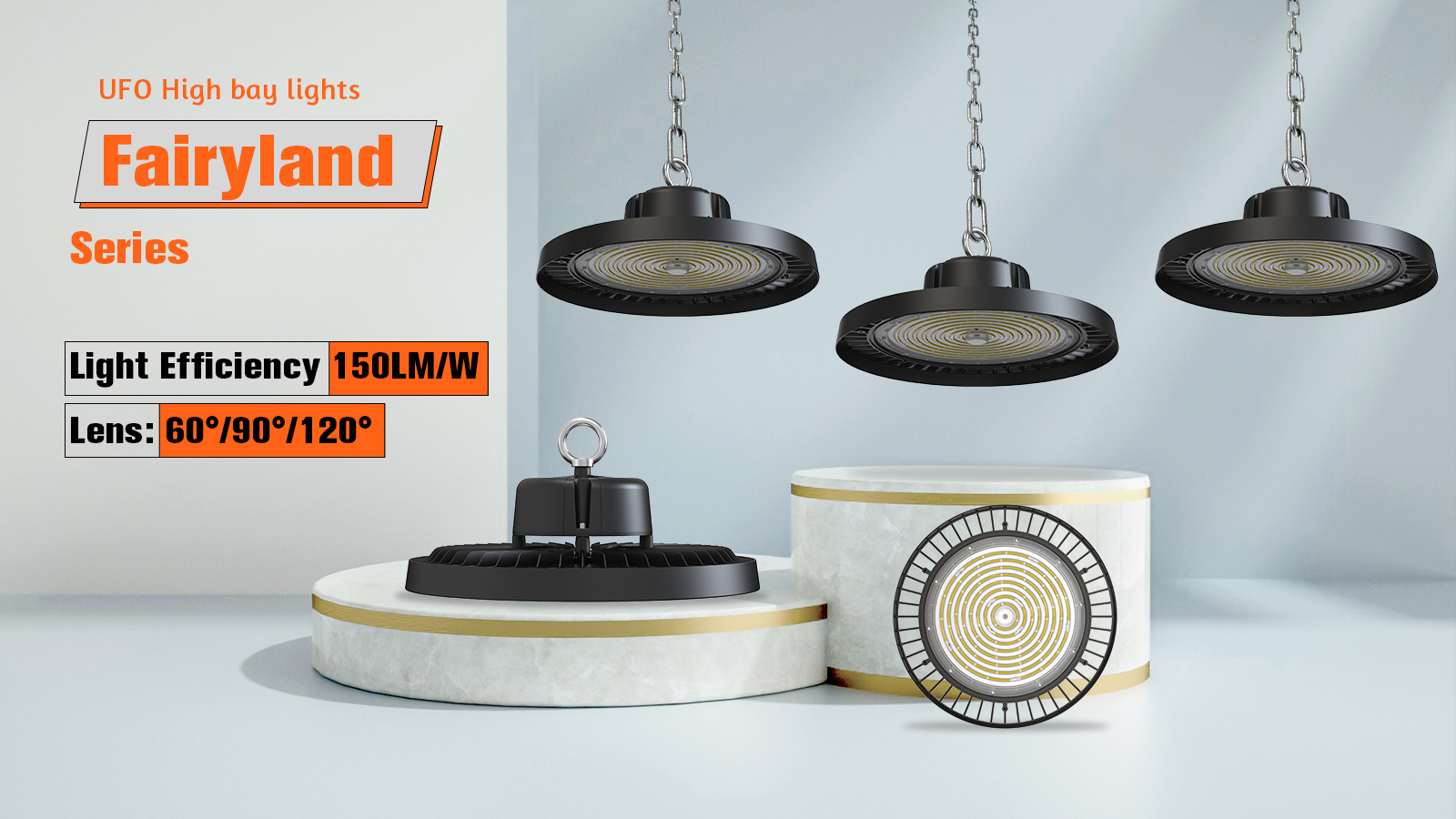
1. Energy Efficient: Reduced Electricity Costs, Directly Lowering Business Costs.
Electricity expenses often constitute a significant proportion of business operating costs, especially in large production workshops, logistics centers, and other locations requiring long-term, large-area lighting. The high energy consumption of traditional lighting fixtures has caused considerable hardship for many businesses.
Metal halide lamps typically have a luminous efficacy of 50-70 lm/W, fluorescent lamps around 70-90 lm/W, while high-quality LED highbay lights can easily achieve a luminous efficacy of 120-150 lm/W, with some high-end products even exceeding 180 lm/W, making them 2-3 times more energy efficient than traditional lighting fixtures. Taking a 1000㎡ production workshop as an example, if traditional 400W metal halide lamps are used, 30 lamps are needed to meet the lighting requirements, with a total power of 12000W (12kW). Based on 10 hours of daily use and an electricity cost of €1/kWh, the monthly electricity cost would be 12kW × 10h × 30 days × €0.35/kWh = €1260.
However, if replaced with
150W LED high bay lights, only 25 lamps are needed to achieve the same or even better lighting effect, with a total power of only 3750W (3.75kW). The monthly electricity cost would be only 3.75kW × 10h × 30 days × €0.35/kWh = ¥393.75, directly saving €866.25 per month and nearly €10,000 per year.
For large logistics centers, chain supermarkets, and similar locations, the lighting area often reaches thousands or even tens of thousands of square meters. The electricity savings from using LED highbay lights are even more significant, making them a "hidden profit growth point" in the long run.
Besides high luminous efficacy, the directional light emission characteristics of LED high-bay lights further enhance energy efficiency. Traditional lighting fixtures suffer from severe light diffusion, with a large amount of light failing to reach the illuminated area, resulting in energy waste.
In contrast, LED highbay lights, through professional optical design, achieve a light utilization rate of over 90%, precisely focusing on the work area, avoiding ineffective waste, and truly achieving "on-demand lighting," ensuring every kilowatt-hour of electricity is used effectively.
2、Ultra-long lifespan: Reduced maintenance hassles and superior overall cost-effectiveness
For locations heavily reliant on continuous lighting, the lifespan of lighting fixtures directly impacts the continuity of production operations and maintenance costs.
Traditional metal halide lamps typically have a lifespan of 8,000-12,000 hours, while fluorescent lamps have a lifespan of approximately 10,000-15,000 hours. This means that even with 10 hours of daily use, the fixtures need to be replaced every 2-3 years. In contrast, LED highbay lights utilize high-quality LED chips and drivers, achieving a lifespan exceeding 50,000 hours. Based on 10 hours of daily use, this translates to a lifespan of over 13 years, 4-6 times that of traditional lamps.
The direct benefit of this ultra-long lifespan is a significantly reduced replacement frequency, avoiding the impact of frequent downtime for lamp replacements on production and operations.
Taking large warehouses as an example, traditional lighting fixtures might require multiple maintenance operations annually. This involves manpower for disassembling and installing lights, and potential disruptions to storage, retrieval, and sorting efficiency due to lighting outages. In contrast, LED industrial and mining lights have a lifespan of over 10 years with virtually no need for replacement, significantly reducing maintenance workload and downtime losses. Simultaneously, maintenance labor costs are also significantly lower.
Replacing traditional lighting fixtures requires professional personnel, especially for those installed at height, necessitating the rental of climbing equipment, with each maintenance costing hundreds of yuan.
The low failure rate of LED industrial and mining lights makes maintenance costs virtually zero.
Considering both initial investment, long-term energy consumption, and maintenance costs, LED industrial and mining lights offer a significant cost-performance advantage.
Although the initial purchase cost is slightly higher than traditional lighting fixtures, the difference can be recovered in just 1-2 years through savings on electricity and maintenance costs. Subsequent years of use incur almost no additional costs, making it a more economical and worry-free choice in the long run.
3、Multi-Scene Adaptability: One Lamp Covers All Lighting Needs
LED highbay lights are designed to meet the diverse lighting needs of different locations. With flexible installation methods, adjustable luminous efficacy parameters, and stable performance, they are widely used in various large spaces, truly achieving "one lamp for multiple uses."
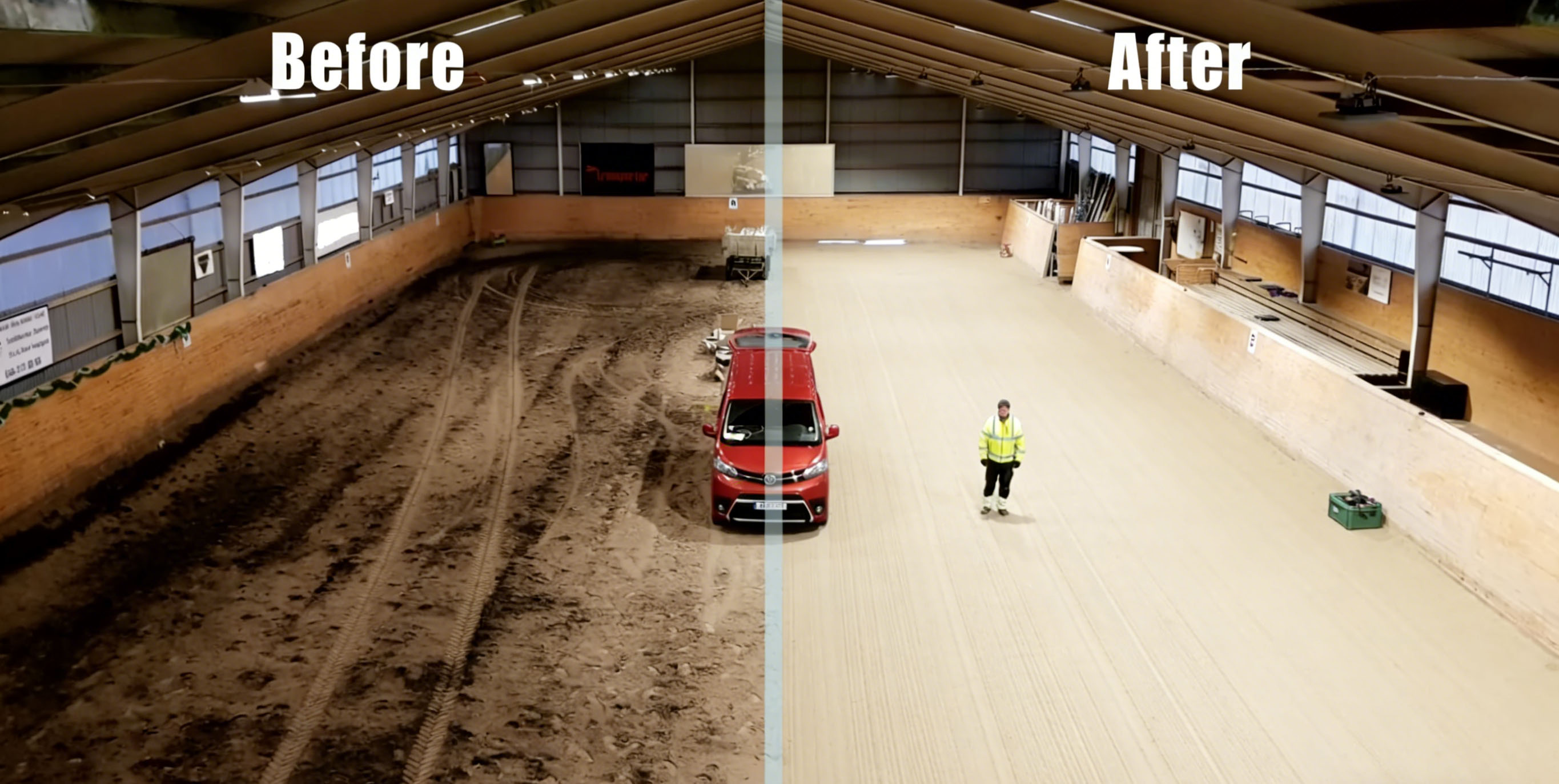
Production Workshops & Production Lines
Production workshops have extremely high requirements for light intensity, uniformity, and color rendering, especially in precision manufacturing and electronic assembly lines. Insufficient light or poor color rendering can lead to product quality defects and increased operational errors.
LED highbay lights can provide precise light intensity of 100-300 lux, with a color rendering index (CRI) ≥80, and some products reaching over 90. They can accurately reproduce the colors of objects, helping workers clearly identify details and improving work accuracy and efficiency.
At the same time, LED highbay lights have excellent shock and dust resistance, adapting to environments with mechanical vibration and high dust levels in workshops. They also offer flexible installation methods (ceiling mount, chain mount, and pole mount are all possible), allowing the installation position to be adjusted according to the production line layout to avoid light obstruction.
Large Warehouses & Logistics Centers
Warehouses and logistics centers are characterized by high ceilings and dense shelving, requiring lighting fixtures with strong penetration and long-distance illumination capabilities.
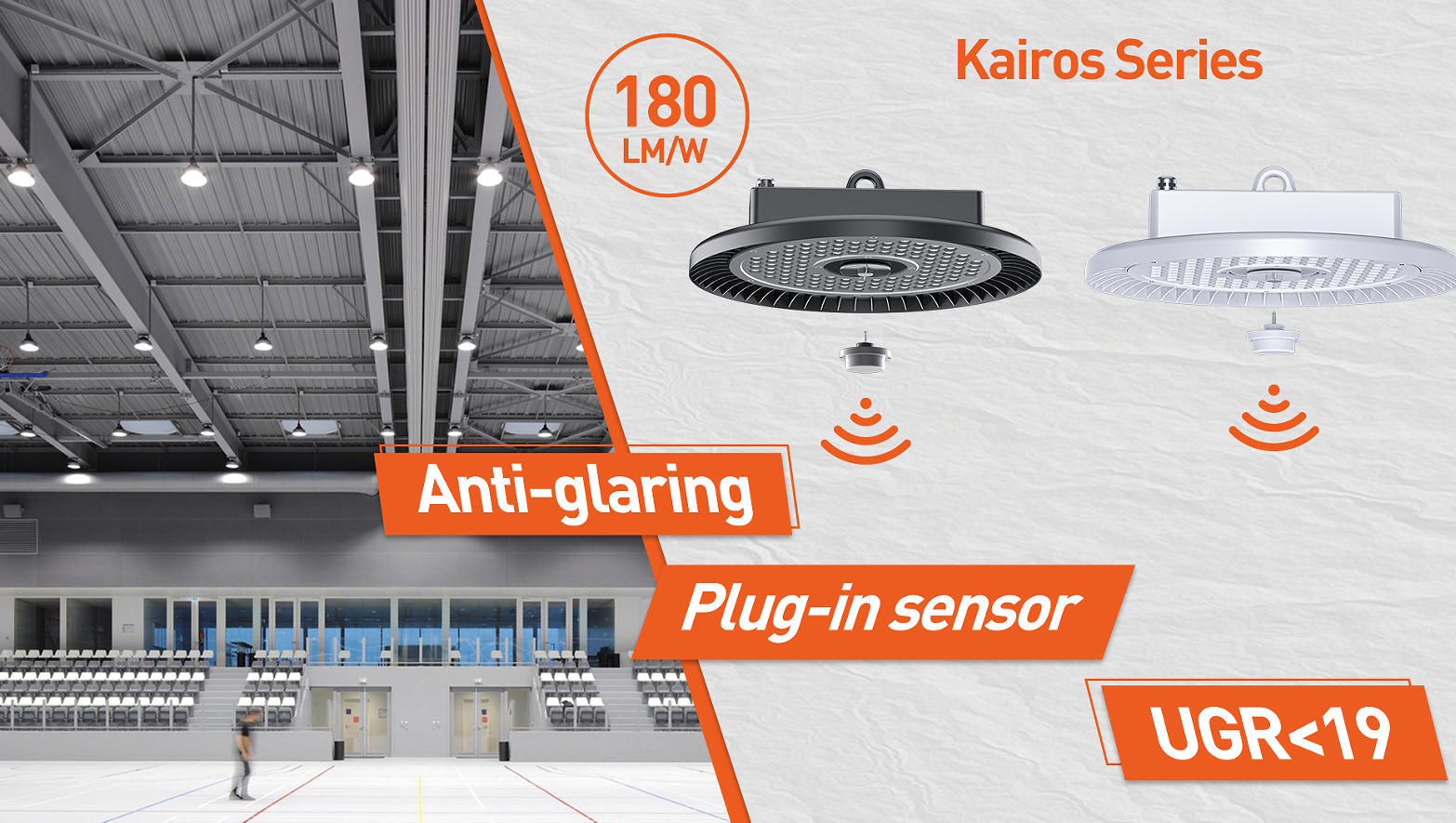
LED highbay lights can illuminate 15-20 meters away. Combined with wide-angle optical lenses, they can achieve uniform illumination over a large area, ensuring sufficient light even on the bottom shelves, facilitating inventory counting, sorting, and handling.
Furthermore, logistics centers typically require 12-16 hours of lighting per day. The energy-saving advantages and extended lifespan of LED highbay lights effectively reduce operating costs and minimize safety hazards associated with nighttime maintenance.
Supermarkets & Department Stores
Supermarket and department store lighting must not only meet basic lighting needs but also enhance the display of merchandise to attract customers.
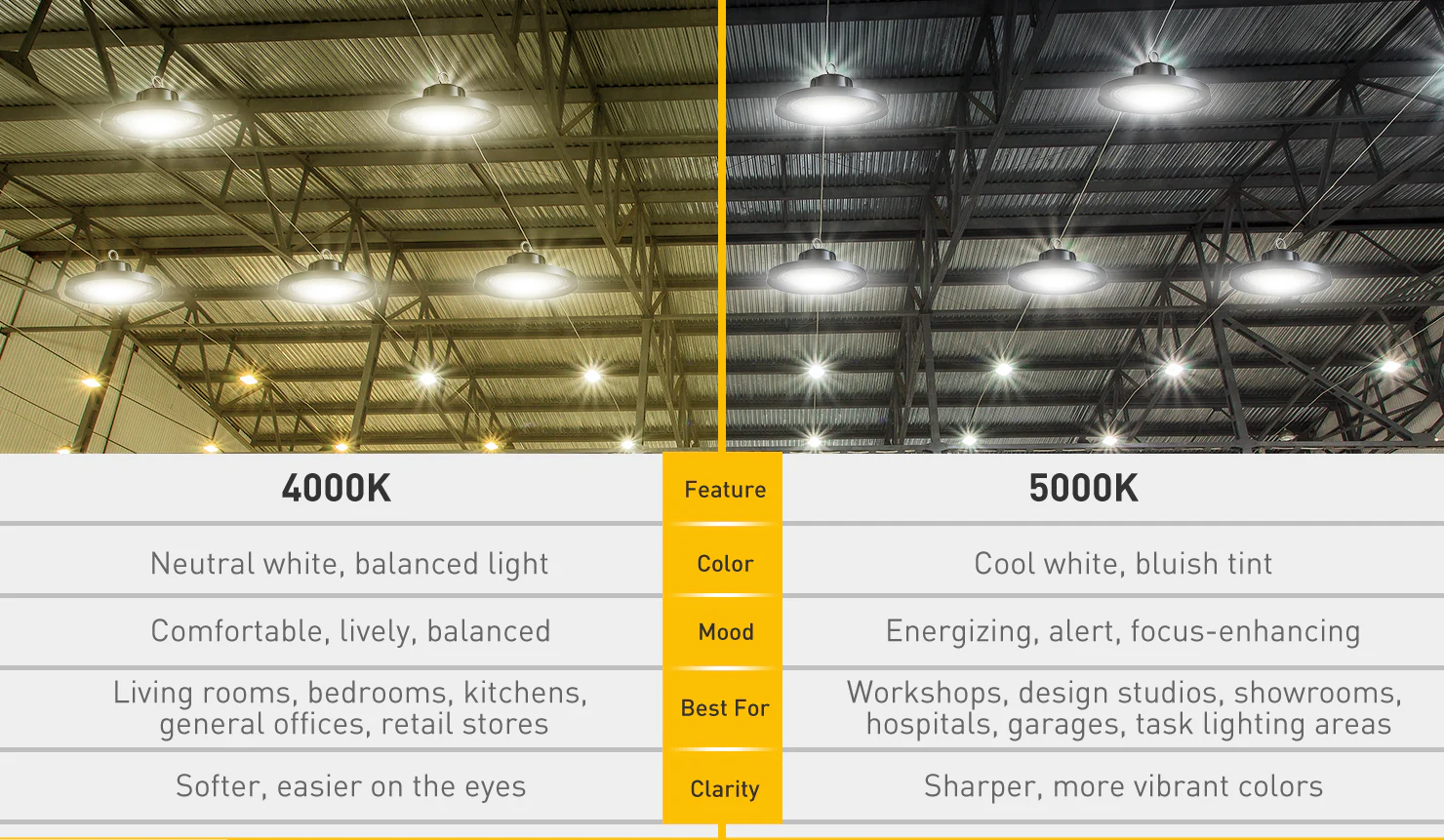
LED industrial and mining lights offer flexible color temperature adjustment (3000K warm light,
4000K neutral light, 6000K cool light). Warm light is suitable for food sections, highlighting the freshness of ingredients; neutral light is suitable for clothing and daily necessities sections, restoring the true colors of products; and cool light is suitable for electronics and hardware sections, enhancing the technological feel of products.
Meanwhile, the flicker-free nature of LED industrial and mining lights prevents customer eye fatigue, improving the shopping experience. Their energy-saving advantages also help supermarkets reduce long-term operating costs, especially for chain supermarkets, where the cost savings from large-scale application are even more significant.
Community Centers & Public Venues
Lighting in
public places such as
community centers,
stadiums, and convention centers needs to balance safety, comfort, and durability.
The instant-on characteristic of LED highbay lights provides ample illumination quickly without preheating, making them suitable for sudden events or emergencies. Their environmentally friendly nature (free of mercury and lead) ensures they pose no harm to the environment or human health, meeting environmental requirements for public places. Furthermore, their ultra-long lifespan and low maintenance costs reduce the management burden on property owners, providing residents and users with a stable and safe lighting environment.
4、Green and Environmentally Friendly: Protecting the Ecological Environment and Practicing Sustainable Development
In today's world, with increasing global environmental awareness, the sustainable development capabilities of enterprises are receiving more and more attention.
Green lighting has become an important manifestation of corporate social responsibility.
Traditional fluorescent lamps and metal halide lamps contain harmful substances such as mercury and lead. If these substances leak, they can cause serious pollution to soil and water sources. Furthermore, these lamps are difficult to recycle after disposal, forming "electronic waste."
LED highbay lights, on the other hand, contain no harmful substances, require no polluting materials in their production process, and are recyclable after disposal. They have virtually no negative impact on the environment, making them truly green and environmentally friendly products.
Furthermore, the energy-saving characteristics of
LED highbay lights are themselves a significant contribution to environmental protection.
Statistics show that lighting accounts for about 12% of total electricity consumption. If all traditional lighting fixtures in industrial and commercial spaces across the country were replaced with LED highbay lights, billions of kilowatt-hours of electricity could be saved annually, equivalent to reducing tens of millions of tons of carbon dioxide emissions. This is of great significance in alleviating energy shortages and mitigating the greenhouse effect.
For businesses, adopting LED highbay lights not only reduces operating costs but also enhances their brand's environmental image, gaining consumer and social recognition.
Furthermore, the flicker-free and low-glare design of LED highbay lights protects human health.
The flicker of traditional lighting fixtures can cause visual fatigue and dizziness, and prolonged exposure to such an environment can affect worker safety and efficiency.
LED highbay lights, on the other hand, use high-quality driver power supplies, achieving flicker-free power supply and providing soft, uniform light, reducing eye strain and improving work comfort and safety.
Choosing LED highbay lights is more than just replacing lights; it's upgrading your business model.
From soaring electricity bills to near-zero energy costs, from frequent maintenance hassles to ten years of worry-free stable use, from the challenges of adapting to multiple scenarios to the convenience of a single lamp, from environmental compliance risks to a green and sustainable brand image—the four core advantages of LED highbay lights precisely address all the core pain points of enterprises in lighting.
With the continuous advancement of LED technology, the luminous efficacy, lifespan, and intelligence level of LED highbay lights will continue to improve, playing a valuable role in more scenarios in the future, creating greater economic and social benefits for enterprises.
If you are still troubled by high lighting costs, troublesome maintenance, and difficulties in scene adaptation,
why not try LED highbay lights? A correct choice will save you ten years of costs and give you a greater competitive edge.


